Modernism

Paul Rudolph goes to the Dentist (but actually, it's the other-way around!)

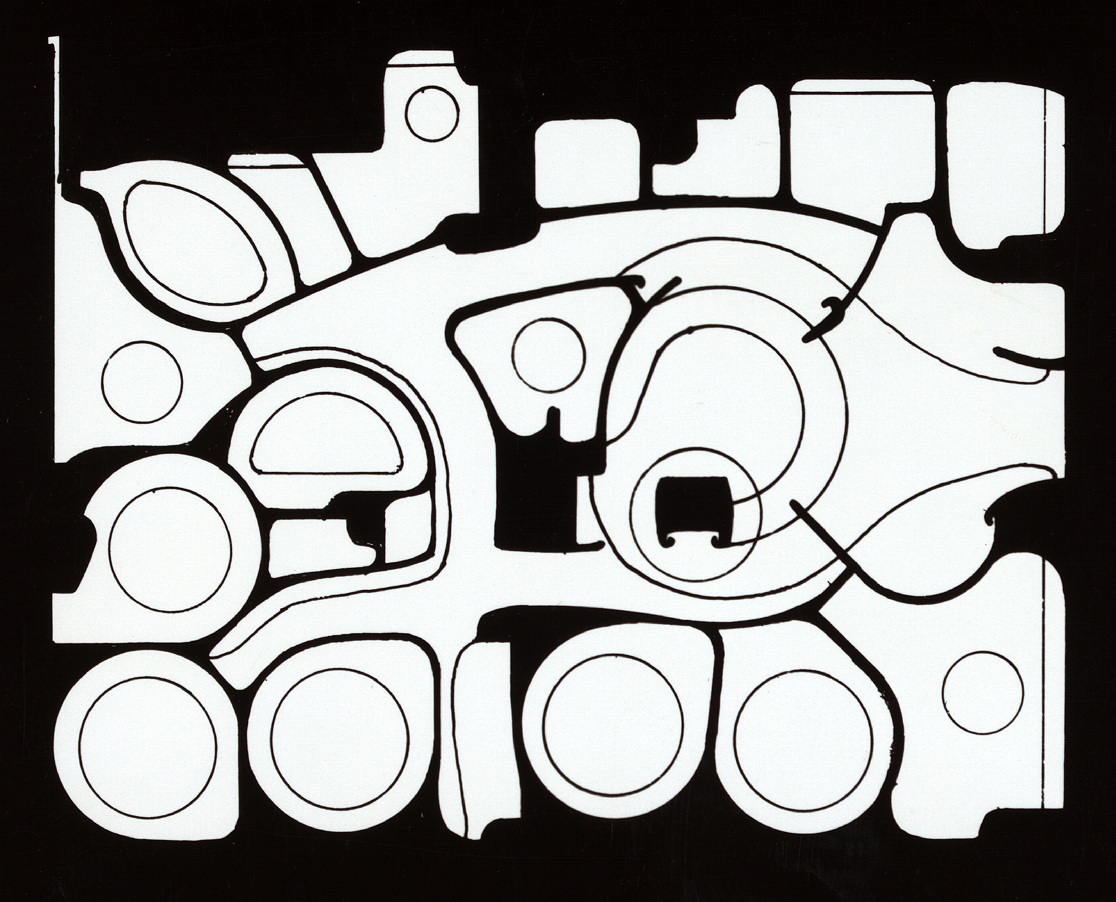
Paul Rudolph’s organically curved floor plan for the dental office of Dr. Nathan Shore, in NYC—a work from the mid-1960’s. While Rudolph was known as a master of geometry and form (and their application to architecture, interiors, and furniture), this sinuous approach to planning was one to which he turned only occasionally. This “poche” version of the plan was used as a decorative graphic on the dental office receptionist station’s glass enclosure.

Paul Rudolph’s organically curved floor plan for the dental office of Dr. Nathan Shore, in NYC—a work from the mid-1960’s. While Rudolph was known as a master of geometry and form (and their application to architecture, interiors, and furniture), this sinuous approach to planning was one to which he turned only occasionally. This “poche” version of the plan was used as a decorative graphic on the dental office receptionist station’s glass enclosure.

CREATION WITHIN A VARIETY OF SCALES AND TYPES: TRUE MASTERS WILL TAKE-ON ALL CHALLENGES

One of the signs of a master architect-designer is their ability to create interesting work at all scales. English architect Charles Ashbee, the Arts & Crafts era designer, is a strong example: designing everything from a typeface -to-furniture -to- houses -to- the renovation of a war-damaged city. His American contemporary, Bertram Goodhue, worked in a similarly broad range of scales: from his design of a typeface that is still in wide use (“Cheltenham”) -to- his Nebraska State Capitol, a building big enough to be seen from a distance of 20 miles.

Paul Rudolph indicated that he would be willing to take on even humble projects, and said:

“‘It makes no difference to me the size of the project. I’ve always said, ‘I would be happy to make a dog house for you, if you would let me make it a unique and very good dog house.’”

And, in fact, some famous architects have applied their architectural skills to dog house design: Frank Lloyd Wright (who called such a commission “an opportunity” in design), and Philip Johnson.

Young Jim Berger lived in a house designed by Frank Lloyd Wright for the Berger family in San Anselmo—and, at age 12, he asked Wright to design a doghouse for his pet labrador retriever. Wright sent a construction drawing and “Eddie’s House” was built. Here, in 2017, Mr. Berger is seen with a reconstruction of it, which was on display at the Wright-designed Marin County Civic Center.

Young Jim Berger lived in a house designed by Frank Lloyd Wright for the Berger family in San Anselmo—and, at age 12, he asked Wright to design a doghouse for his pet labrador retriever. Wright sent a construction drawing and “Eddie’s House” was built. Here, in 2017, Mr. Berger is seen with a reconstruction of it, which was on display at the Wright-designed Marin County Civic Center.

Philp Johnson’s 1997 design: a “dog house” on the Glass House estate. According to the National Trust for Historic Preservation’s website: “This small structure was created by Johnson as a conceptual project for a classically-inspired tomb. However, when completed the small wooden object turned out to be just the right size for his and [David] Whitney’s new puppies to inhabit. . . .”

Philp Johnson’s 1997 design: a “dog house” on the Glass House estate. According to the National Trust for Historic Preservation’s website: “This small structure was created by Johnson as a conceptual project for a classically-inspired tomb. However, when completed the small wooden object turned out to be just the right size for his and [David] Whitney’s new puppies to inhabit. . . .”

To our knowledge, Paul Rudolph never designed a dog house, but—across his half-century career, in which he engaged in hundreds of commissions—he was not above taking-on projects of a less-than-glamourous nature, or for clients with limited budgets.

One of the happy surprises we’ve encountered in the archives of the Paul Rudolph Heritage Foundation is an article from the Journal of the American Dental Association—and it’s about just such a project: Rudolph’s 1967 design for a dental office for Dr. Nathan Shore.

THE DENTIST GOES TO RUDOLPH

Rudolph’s client, Dr. Nathan Shore, was a dental pioneer in working on TMJ —and wrote this key book on the topic.

Rudolph’s client, Dr. Nathan Shore, was a dental pioneer in working on TMJ —and wrote this key book on the topic.

Dr. Nathan A. Shore (1914-1984), was a dental specialist and pioneer in correcting a jaw condition called temporomandibular joint syndrome—known more widely as TMJ—-a subject upon which he wrote numerous articles and a book (and for which he devised a test to determine whether the pain was medical or dental in origin.)

In he 1960’s, Dr. Shore asked Paul Rudolph to design his dental offices: they were to be located within a nearly windowless 1,830 square foot space on Central Park South, in the midtown section of Manhattan. Rudolph divided this area into 19 spaces: 

  • four dental operatories

  • two hygienist operatories

  • two con­sultation rooms

  • an audiovisual room (for patient education)

  • a business office

  • a reception room

  • a kitchen for staff use

  • an X-ray room

  • two laboratories

  • two washrooms

  • all the above spaces connected by a continuous corridor

  • all remaining spaces, between the walls of the rooms, were utilized for storage.

Placing all these rooms and functions into the available square footage was an tour-de-force of space-planning efficiency. Although suite corridors were narrow, circular mirrors mounted on walls, and varied ceiling heights created an illusion of space.

Paul Rudolph’s floor plan for the Nathan Shore dental offices—probably the “presentation drawing” which was shown to the client (and/or other parties, such as the building management) to explain the design and obtain their approval. Each space in this quarter-inch scale plan is labeled; overall dimensions of the space are shown; and the entry is indicated by an arrow shown toward the bottom-center of the drawing.

Paul Rudolph’s floor plan for the Nathan Shore dental offices—probably the “presentation drawing” which was shown to the client (and/or other parties, such as the building management) to explain the design and obtain their approval. Each space in this quarter-inch scale plan is labeled; overall dimensions of the space are shown; and the entry is indicated by an arrow shown toward the bottom-center of the drawing.

A screen capture from the Museum of Modern Art’s website, showing a 1961 Jason Seley sculpture which is part of their collection: “Masculine Presence”. Like the sculpture that was in the Shore Dental office, this example is made from auto parts—Seley’s most frequent medium.

A screen capture from the Museum of Modern Art’s website, showing a 1961 Jason Seley sculpture which is part of their collection: “Masculine Presence”. Like the sculpture that was in the Shore Dental office, this example is made from auto parts—Seley’s most frequent medium.

Furniture, in reception and some internal offices, included chairs by Charles and Ray Eames (from Herman Miller); and by Warren Platner (from Knoll International).

Desk lighting was provided by numerous “Lytegem” lamps (by Lightolier)—then and now, one of the most platonically pure lamp designs, made from a sphere and a cube—a composition strongly appealing to architects committed to the Modern aesthetic [This 1965 design, by Michael Lax, is in the collection of MoMA.]

The reception area contains a sculpture made of automobile hubcaps. It is by Jason Seley, a artist known for creating artworks from chromium steel automobile body parts.

The constructed design received coverage—perhaps the only article about it—in a 1971 issue of The Journal of the American Dental Association. The article, "Functional Design based on Pattern of Work in a Dental Suite", spoke of Rudolph’s design approach to meet the challenges involved in such a project, and included a description of the results, photos, and a floor plan. The article’s author, Eileen Farrell, had been an editorial supervisor at the American Dental Association, and some of her observations included:

"Dentistry in the round is one way to describe the unique dental suite designed for Dr. Nathan Allen Shore by architect Paul Rudolph of Yale. . . .The circular motif is repeated in various ways that add to the total effect. Lighting in the operatories, for instance, is diffused from a circular well in the ceiling across which the dental light slides on a track integrated with the ceiling diffusor. A curved Plexiglass screen divides the business office from the recep­tion room, making each space seem larger. A circular rendition of aspects of the temporomandibular joint decorates the door leading to the operatories.”

"Besides creating an illusion of space, the design aims at quiet and a sense of privacy. To this end, circulation of pa­tients and staff is kept to a minimum, and although there are eight staff members and a steady stream of patients, the suite never seems to be crowded. One reason is that the movement of traffic is in the round rather than back and forth. . . .When a patient arrives for his appointment, the secretary opens the door by remote control and admits him to the recep­tion area."

"Doctor Shore finds that his staff is happy in the well-designed quarters. . . .Functional design, he says, seems well suited to a most progressive profession."

smallest First page.PNG
dental+article+page+2.jpg
dental article page 3.jpg
dental article page 4.jpg
dental article page 5.jpg
screen of recepition area.JPG

Above are small screen-captures of the pages of the article about the Rudolph-designed Nathan Shore dental office. At the lower-right is a slightly enlarged portion of one page, showing the reception area—and, at its right side, one can see that the suite’s floor plan has been incorporated into the reception desk’s window, as an intriguing ornamental pattern. The full article can be accessed through the JADA website, here.

RUDOLPH AND CURVILNEAR DESIGN

The work of Paul Rudolph presents difficulties for historians—at least for the ones who are uncomfortable with the great range of forms in his designs, and the multiple approaches Rudolph used when answering hundreds of architectural challenges. Attempts to pigeonhole a great creative force like Rudolph are doomed to futility—but some observations on his formal vocabulary are worthwhile, like our analysis of his use of crystalline shapes at Burroughs Wellcome.

But what about Rudolph’s use of curved forms? Rudolph could hardly be said to be afraid of curves: they show-up early in his practice: most notably in the Healy “Cocoon” house of 1950. But projects where “free form” or “biomorphic” curvilinear elements and planning dominate are not all-that-frequent in his career. Some notable exceptions are his sculptural handling of concrete in his Temple Street Parking Garage and the forms and spaces of the Boston Government Service Center. But even in Rudolph’s Endo Laboratories—one of his finest projects from the beginning of the 1960’s, which is well-known for its curved elements—or his Daiei Headquarters Building in Japan, most of the curves are carefully controlled portions of circles or ellipses. Thus when we do encounter designs in which Rudolph uses free and energetic organic lines (as in Dr. Shore’s offices), there is good reason to give such projects extra focus—and even to celebrate this branch of Rudolph’s creativity.

In the spirit of our start of this article—pointing-out that design masters can productively focus on projects of all scales—we end with an example at the smaller end of the range of objects which Paul Rudolph designed: a desk for Endo Laboratories. Thoughtfully designed for efficient function, and carefully drawn, detailed and specified (as the drawing shows)—it also fully embraces “free form” curvilinear design.

An “executive desk”, designed by Paul Rudolph for the offices of Endo Laboratories, his 1960 project in Garden City.

An “executive desk”, designed by Paul Rudolph for the offices of Endo Laboratories, his 1960 project in Garden City.

IMAGE CREDITS

NOTES:

The Paul Rudolph Heritage Foundation gratefully thanks all the individuals and organizations whose images are used in this non-profit scholarly and educational project.

The credits are shown when known to us, and are to the best of our knowledge, but the origin and connected rights of many images (especially vintage photos and other vintage materials) are often difficult determine. In all cases the materials are used in-good faith, and in fair use, in our non-profit, scholarly, and educational efforts. If any use, credits, or rights need to be amended or changed, please let us know.

When/If Wikimedia Commons links are provided, they are linked to the information page for that particular image. Information about the rights for the use of each of those images, as well as technical information on the images, can be found on those individual pages.

CREDITS:

Floor plans of the Nathan A. Shore dental office (both “poche” and linework versions), and the drawing of the desk for Endo Laboratories: © The Estate of Paul Rudolph, The Paul Rudolph Heritage Foundation; Frank Lloyd Wright-designed doghouse: photo courtesy of Marin County Civic Center, as shown on the city’s website; Philip Johnson-designed doghouse: photo by and courtesy of Sean Sheer of Urban Dog; Jason Seley sculpture, within the collection of the Museum of Modern Art in New York City: screen capture from a portion of the MoMA web page devoted to that sculpture; JADA article on the Nathan A. Shore dental office: screen captures from the 1971 issue, Volume 83, Issue 1; Cover of Dr. Shore’s book: from the Amazon page devoted to that book.
We need to fight harder to protect the future of our past

FROM AN EXAMPLE OF CORPORATE PRIDE AND CUTTING EDGE RESEARCH—

FROM AN EXAMPLE OF CORPORATE PRIDE AND CUTTING EDGE RESEARCH—

—TO DEMOLITION BY NEGLECT AND MISINFORMATION.

—TO DEMOLITION BY NEGLECT AND MISINFORMATION.

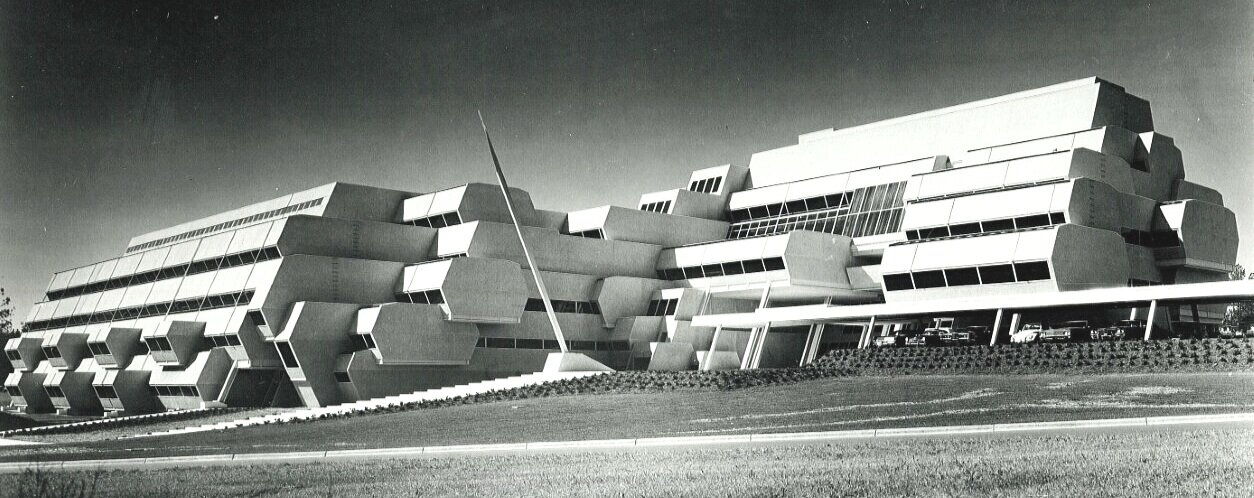
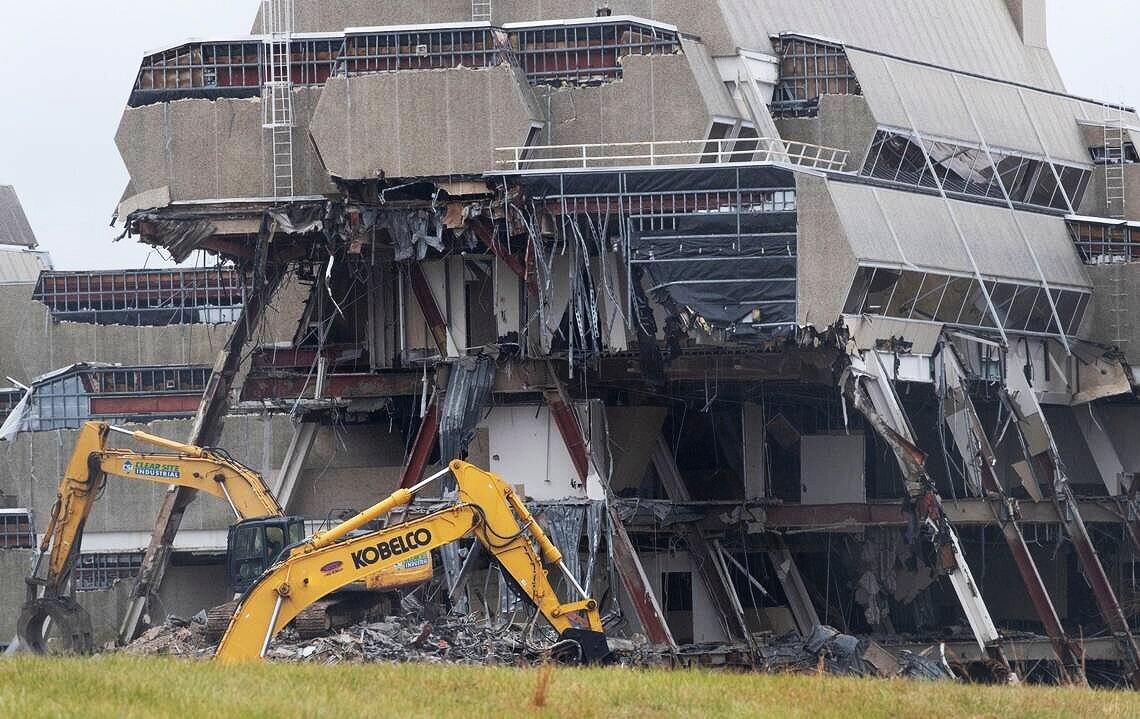
The Burroughs Wellcome Building is no more.

  • One of America’s most forward-looking buildings, an icon of design, and -

  • the site of Nobel Prize-winning and life-saving research, and -

  • a research center designed for growth - a feature so appreciated by the client that they brought the architect back (three times!) to expand the building, and -

  • a building made, inside and out, to inspire and foster innovation, and -

  • a design so striking that it was used as sets for film and television, and -

  • a landmark of its region and state, and -

  • one of architect Paul Rudolph’s largest creations -

is gone.

Modern architecture is part of America’s cultural legacy - and buildings designed by Paul Rudolph are among some of the best examples of the our architectural achievements: Rudolph’s architecture simultaneously displays practical innovation, creative exuberance, spatial richness, and symbolic depth.

Built as Burroughs Wellcome’s US headquarters and research center (and a prominent landmark within North Carolina’s Research Triangle Park), the building was praised by the company leadership which commissioned it:

“This building is an exciting and ingenious combination of forms [in which] one discovers new and different qualities of forms and spaces . . . a splendid climate for scientific scholarship and for the exchange of ideas.” — Fred A. Coe Jr., President of Burroughs Wellcome

and was hailed by:

“. . . .all of us who recall the vibrancy of this building . . . .I count myself very fortunate to have worked there. It was an amazing structure. We were young, and life was full of hope and promise. We were all witnesses, if not direct contributors, to amazing scientific discoveries and their promotion, during an exciting time for medical research.”

“I spent 32 years with [Burroughs Wellcome]. . . At that time, if any space was conceived to bring out the creative, inspirational, thoughts—this was it, in my opinion. I loved working there. We invented and developed more pharmaceutical products in those years. . . .We were “family” but more to the point we were colleagues who were allowed to trust the expertise of each other.”

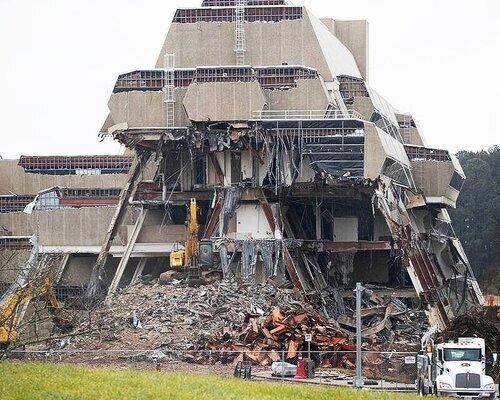
United Therapeutics - the current owner of the site - had asserted that a significant portion of the building would be restored and reused, but - despite Burroughs Wellcome’s important history and innovative design - they decided to demolish the structure without discussion. So little discussion, that local preservation groups we reached out to about the demolition permit thought it must be for an anticipated asbestos abatement. Wholesale demolition was not considered a possibility.

When supporters learned of its impending demolition, there was enough people trying to see it that security had to push an existing fence farther from it to hide the destruction from the public. People we spoke to who tried to photograph the building were threatened by security guards with trespassing and had photos deleted from their cameras.

PROTECTING THE FUTURE OF THE PAST

Burroughs Wellcome, a significant work of architecture, is now permanently, irretrievably lost. This puts a spotlight on the need to protect America’s cultural heritage—and that includes this country’s great buildings.

The Paul Rudolph Heritage Foundation and other organizations are engaged in that fight to preserve our past.

The destruction of Burroughs Wellcome led the United States chapter of the international preservation organization Docomomo to create The Advocacy Fund:

As part of our #ModernLove campaign, and in response to the recent demolition of Burroughs Wellcome, Docomomo US is announcing the creation of a new initiative: The Advocacy Fund. Gifts to this new initiative will go directly to critical advocacy efforts and will support local and national work.

Modern Love means many things to us: it means celebrating iconic sites like the Ford Foundation Center for Social Justice that received a 2020 Modernism in America Award of Excellence; it means fighting for significant sites like the Hirshhorn Museum and Sculpture Garden; and it means avoiding the loss of significant buildings like Burroughs Wellcome designed by Paul Rudolph that was demolished earlier this year because it lacked appropriate preservation protections.

With your support, Docomomo US can provide assistance to local advocates and campaigns, participate in local and national preservation review meetings including the Section 106 process, and continue to speak out on the issues that concern you the most.

If the loss of the Burroughs Wellcome building makes you angry, please consider donating to the Advocacy Fund. All gifts up to $10,000 will be matched by the Docomomo US Board of Directors!

Buildings by Rudolph—among the world’s most significant works of Modern architecture—are continually threatened with demolition or abuse. Vigilance and advocacy is needed.

We are committed to urging, advising, and campaigning for the preservation (and proper care) of PAUL RUDOLPH’s architectural legacy.

Please give to the Advocacy Fund to preserve the richness of Paul Rudolph’s contributions—and to show:

Demolition is never the answer.

FROM AN ICON OF AMERICAN DESIGN —

FROM AN ICON OF AMERICAN DESIGN

— TO DEMOLITION DEBRIS.

TO DEMOLITION DEBRIS.

And if you see something going on at a Rudolph site—that a building may be threatened, or is not maintained, or is about to be marred by an insensitive ‘update’ - please let us know (we’re easy to contact.)


IMAGE CREDITS:

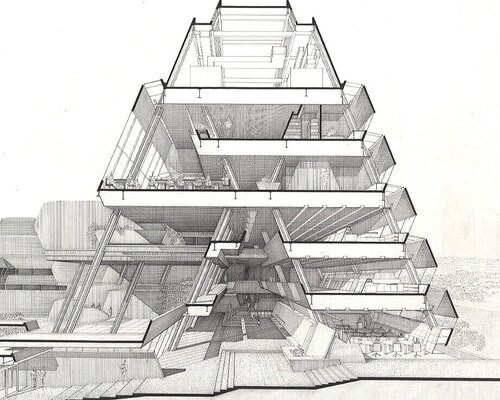
Top photograph of the Burroughs Wellcome Building: image courtesy of the Joseph W. Molitor architectural photographs collection, located in Columbia University, Avery Architectural & Fine Arts Library, Department of Drawings & Archives; Photographs of the Burroughs Wellcome building, in the process of demolition: photography by news photojournalist Robert Willett, as they appeared in a January 12, 2021 on-line article in the Raleigh, NC based newspaper The News & Observer; Perspective-section drawing, by Paul Rudolph, through the main body of the Burroughs Wellcome building: © The Estate of Paul Rudolph, The Paul Rudolph Heritage Foundation

LONG ISLAND MODERNISM: a Book for Architecture Lovers (especially if you admire Paul Rudolph)

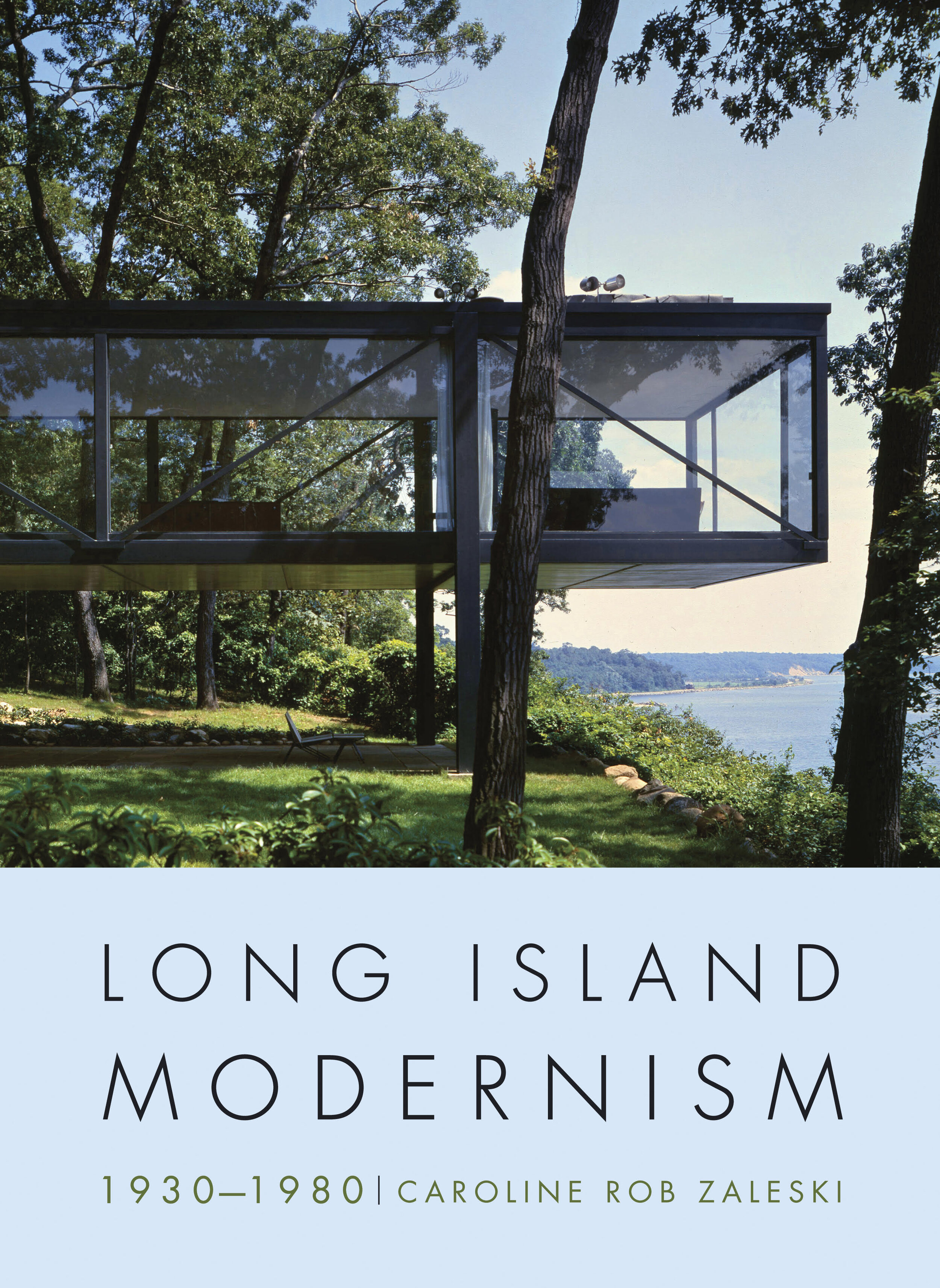
Paul Rudolph and Philip Johnson were friends for decades, and both are well represented in Caroline Rob Zaleski’s book on Modern architecture on Long Island. The book’s cover shows Johnson’s Leonhardt House, a work from 1956 in Lloyd's Harbor, NY—a design which combined platonic forms, structural daring, detailing elegance, and efficient planning.

Paul Rudolph and Philip Johnson were friends for decades, and both are well represented in Caroline Rob Zaleski’s book on Modern architecture on Long Island. The book’s cover shows Johnson’s Leonhardt House, a work from 1956 in Lloyd's Harbor, NY—a design which combined platonic forms, structural daring, detailing elegance, and efficient planning.

“With eye-opening photographs and surprising discoveries from a forgotten past … Long Island Modernism: 1930-1980 surveys a wealth of pioneering architecture produced locally by famous builders from around the world.”
— The Wall Street Journal

A LINE-UP OF ARCHITECTURAL STARS—AND THEY ALL DESIGNED FOR LONG ISLAND

Wright-Mies-Gropius-Rudolph-Johnson-Breuer-Meier-Harrison-Sert-Johansen-Pei-Raymond-Goodman-Nelson-Stone-Neutra-Lescaze— When it comes to famous architects working in America, did we leave anybody out? .

Within a 50 year period, all of the above-mentioned architects—a constellation of some of Modernism’s most celebrated designers—designed buildings and interiors for sites on Long Island, that island landmass which extends eastward from New York City and into the Atlantic.

To have all the above listed designers working within in the same area is an indication that, with respect to Modern architecture, it must be one of the culturally richest regions in the country. Clearly, this concentration of stellar talent and superb design had a history that needed to be revealed—and architectural historian Caroline Rob Zaleski delves into it, in her fascinating and visually rich book, LONG ISLAND MODERNISM 1930-1980

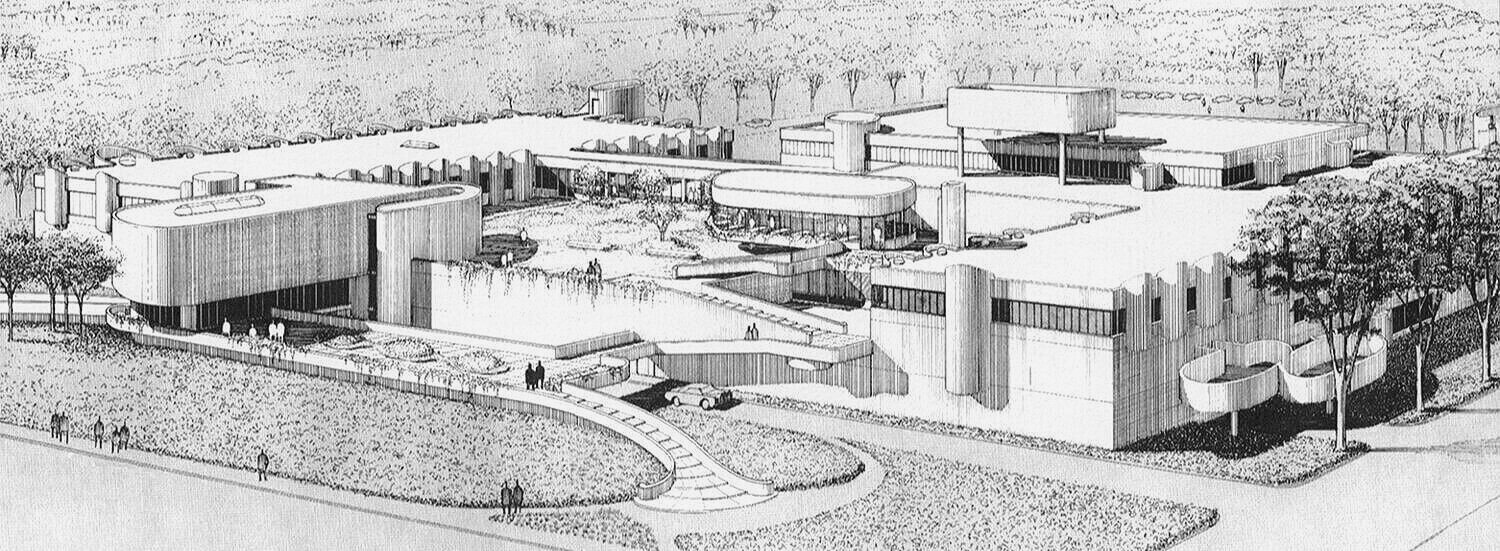
A rendering of Endo Laboratories, which was built in Garden City, Long Island— a Paul Rudolph design from the first half of the 1960’s. In 1964 it was the recipient of an award from the Concrete Industry Board of New York as “Concrete Building of the Year” for “representing the best in conception, originality, and applicability of concrete in both design and construction.” Caroline Rob Zaleski’s book, “Long Island Modernism,” delves into this fascinating and complex project.

A rendering of Endo Laboratories, which was built in Garden City, Long Island— a Paul Rudolph design from the first half of the 1960’s. In 1964 it was the recipient of an award from the Concrete Industry Board of New York as “Concrete Building of the Year” for “representing the best in conception, originality, and applicability of concrete in both design and construction.” Caroline Rob Zaleski’s book, “Long Island Modernism,” delves into this fascinating and complex project.

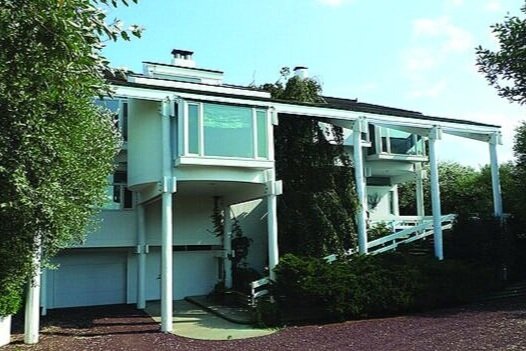
The Siegel Residence is one of several Paul Rudolph designs that are explored in “Long Island Modernism”

The Siegel Residence is one of several Paul Rudolph designs that are explored in “Long Island Modernism”

THE BOOK

LONG ISLAND MODERNISM 1930-1980 belongs in the library of anyone interested in the history of Modernism in the USA. It engages with the fascinating question: What motivated clients to commission Modern architects for their buildings—in a range of building types: commercial, residential, and institutional—and in an era when Modernism was still emerging as a style that was yet-to-be fully appreciated (and was not as comprehensively accepted as it is now.) As William L. Hamilton, in his positive review of the book in The Architect’s Newspaper put it:

Zaleski rises to the occasion, as architectural writers so often don’t, when pressed into play to give social context to builders and their buildings.”

The book includes an abundance archival photographs and drawings—often of surprising projects: real “discoveries” that are little-known even to design aficionados. Moreover the book itself, designed by Abigail Sturges, has an expansive character: its reproduced images and large format manifests some of the highest production values in architectural publishing.

Author, scholar, and preservation activist Caroline Rob Zaleski did extensive research to bring forth this book—one that is rich in history, and design excellence.

Author, scholar, and preservation activist Caroline Rob Zaleski did extensive research to bring forth this book—one that is rich in history, and design excellence.

THE AUTHOR

Caroline Rob Zaleski received her graduate degree in architectural preservation from Columbia University’s School of Architecture, Planning and Preservation, and soon after became a leading advocate for the preservation of modern architecture in New York City and on Long Island. Her book, LONG ISLAND MODERNISM 1930-1980, is based on her field survey for the Society for the Preservation Antiquities—recently re-named Preservation Long Island, where she is also a trustee. She has been chair of the Preservation League of New York State “7 to Save Endangered Sites Program” wherein she encouraged the inclusion of applications relating to twentieth-century Modernism and recent New York State history. Her proudest “Save” was working to place the Edward Durell Stone–designed A. Conger Goodyear House, in Old Westbury, Long Island, on the State and National Register and World Monuments Watch. She also led a successful campaign to raise awareness of and civic involvement in the preservation and repurposing of Eero Saarinen’s TWA Terminal at John F. Kennedy Airport.

ENDORSEMENTS & REVIEWS

LONG ISLAND MODERNISM has received significant, positive reviews—including:

“Not only highlights what the island offers in terms of modern architecture, it is an excellent primer on modernism itself.”
—  Regional Planning Association

“Stunningly illustrates how modernism is alive and well on Long Island.”
—  ON: A Global Lighting Publication

“Comprehensive, exhaustively researched, and carefully detailed . . . . This is a book that enriches our understanding of an important component of twentieth-century culture and belongs in the library of anyone interested in the history of Modern architecture in America.”
—  APT Bulletin: Journal of Preservation Technology

“A sweeping and authoritative new book, Long Island Modernism 1930-1980, by Caroline Rob Zaleski thoughtfully covers the astonishing architectural and landscape architectural achievements in the area.”
— Huffington Post

BOOK AVAILABILITY

Long Island Modernism is available through a variety of sellers—but a limited number of copies are still available at a significant discount through the Paul Rudolph Heritage Foundation’s Shop” page, HERE.

BOOK DATA

  • Title: Long Island Modernism 1930-1980

  • Author: Caroline Rob Zaleski

  • Publisher: W. W. Norton

  • Publisher’s web page for the book: here

  • ISBN: 978-0-393-73315-D

  • Cover Size: 12-1/4” tall × 9-1/4” wide

  • Format: Hardcover

  • Pages: 336

  • Illustrations:  200 black-and-white illustrations, 20 color illustrations


IMAGE CREDITS

NOTES:

The Paul Rudolph Heritage Foundation gratefully thanks all the individuals and organizations whose images are used in this non-profit scholarly and educational project.

The credits are shown when known to us, and are to the best of our knowledge, but the origin and connected rights of many images (especially vintage photos and other vintage materials) are often difficult determine. In all cases the materials are used in-good faith, and in fair use, in our non-profit, scholarly, and educational efforts. If any use, credits, or rights need to be amended or changed, please let us know.

When/If Wikimedia Commons links are provided, they are linked to the information page for that particular image. Information about the rights for the use of each of those images, as well as technical information on the images, can be found on those individual pages.

CREDITS, FROM TOP-TO-BOTTOM:

Book cover: provided by author; Perspective rendering of Paul Rudolph’s Endo Labs: rendering by Brian Conant, © The Estate of Paul Rudolph, The Paul Rudolph Heritage Foundation; Paul Rudolph’s Siegel Residence: photograph by Donald Luckenbill, © The Estate of Paul Rudolph, The Paul Rudolph Heritage Foundation; Author’s photo: provided by author