Architectural History

We need to fight harder to protect the future of our past

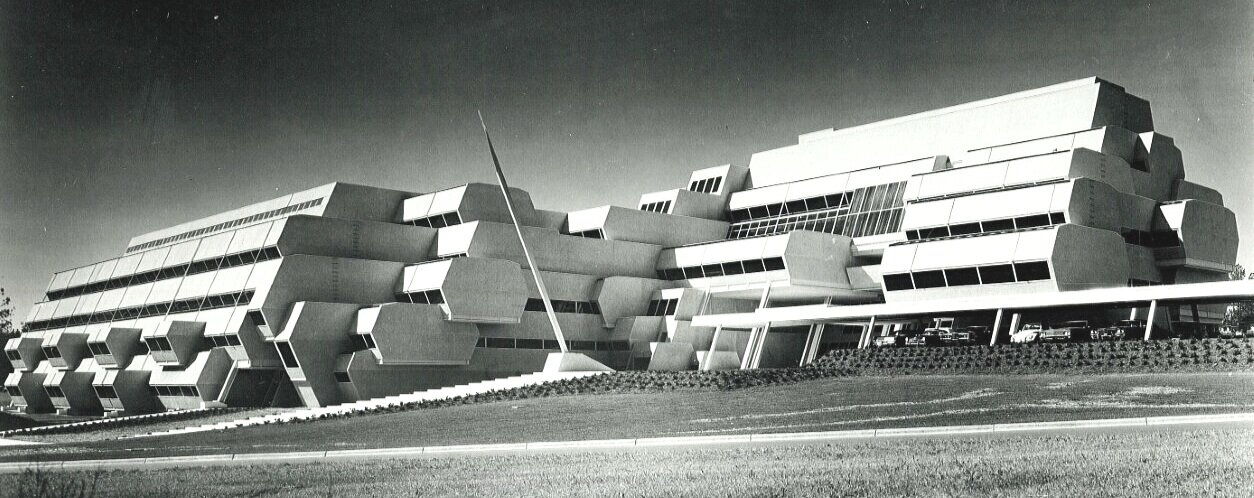
FROM AN EXAMPLE OF CORPORATE PRIDE AND CUTTING EDGE RESEARCH—
FROM AN EXAMPLE OF CORPORATE PRIDE AND CUTTING EDGE RESEARCH—

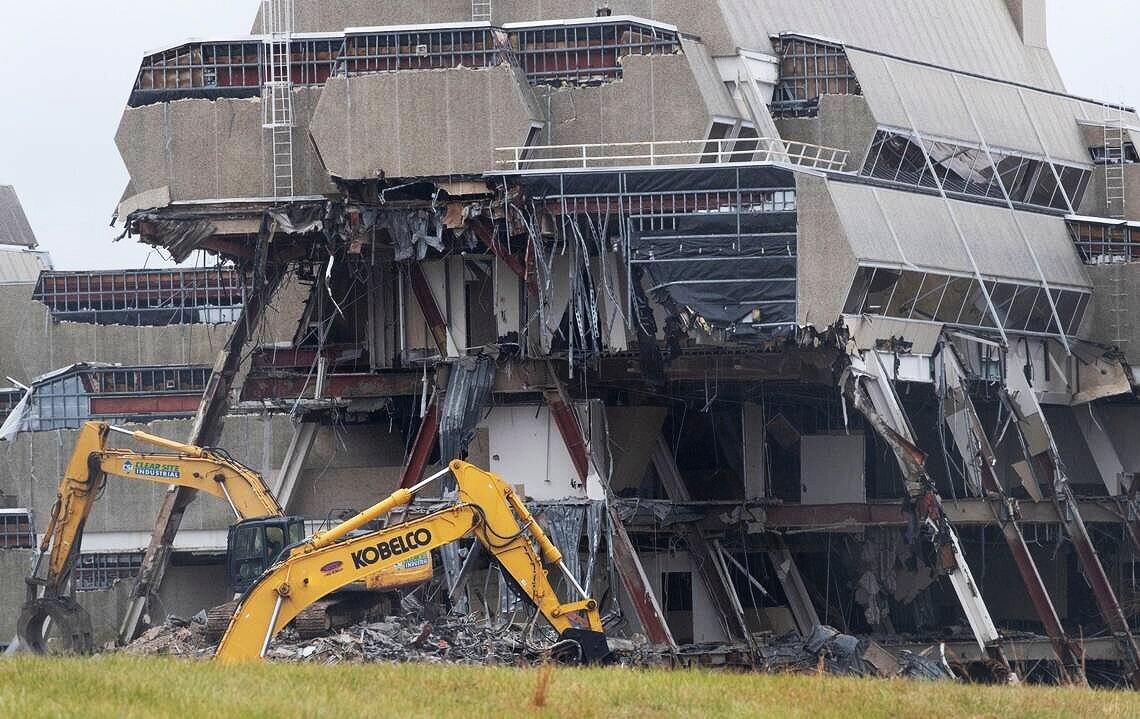
—TO DEMOLITION BY NEGLECT AND MISINFORMATION.

—TO DEMOLITION BY NEGLECT AND MISINFORMATION.

The Burroughs Wellcome Building is no more.

  • One of America’s most forward-looking buildings, an icon of design, and -

  • the site of Nobel Prize-winning and life-saving research, and -

  • a research center designed for growth - a feature so appreciated by the client that they brought the architect back (three times!) to expand the building, and -

  • a building made, inside and out, to inspire and foster innovation, and -

  • a design so striking that it was used as sets for film and television, and -

  • a landmark of its region and state, and -

  • one of architect Paul Rudolph’s largest creations -

is gone.

Modern architecture is part of America’s cultural legacy - and buildings designed by Paul Rudolph are among some of the best examples of the our architectural achievements: Rudolph’s architecture simultaneously displays practical innovation, creative exuberance, spatial richness, and symbolic depth.

Built as Burroughs Wellcome’s US headquarters and research center (and a prominent landmark within North Carolina’s Research Triangle Park), the building was praised by the company leadership which commissioned it:

“This building is an exciting and ingenious combination of forms [in which] one discovers new and different qualities of forms and spaces . . . a splendid climate for scientific scholarship and for the exchange of ideas.” — Fred A. Coe Jr., President of Burroughs Wellcome

and was hailed by:

“. . . .all of us who recall the vibrancy of this building . . . .I count myself very fortunate to have worked there. It was an amazing structure. We were young, and life was full of hope and promise. We were all witnesses, if not direct contributors, to amazing scientific discoveries and their promotion, during an exciting time for medical research.”

“I spent 32 years with [Burroughs Wellcome]. . . At that time, if any space was conceived to bring out the creative, inspirational, thoughts—this was it, in my opinion. I loved working there. We invented and developed more pharmaceutical products in those years. . . .We were “family” but more to the point we were colleagues who were allowed to trust the expertise of each other.”

United Therapeutics - the current owner of the site - had asserted that a significant portion of the building would be restored and reused, but - despite Burroughs Wellcome’s important history and innovative design - they decided to demolish the structure without discussion. So little discussion, that local preservation groups we reached out to about the demolition permit thought it must be for an anticipated asbestos abatement. Wholesale demolition was not considered a possibility.

When supporters learned of its impending demolition, there was enough people trying to see it that security had to push an existing fence farther from it to hide the destruction from the public. People we spoke to who tried to photograph the building were threatened by security guards with trespassing and had photos deleted from their cameras.

PROTECTING THE FUTURE OF THE PAST

Burroughs Wellcome, a significant work of architecture, is now permanently, irretrievably lost. This puts a spotlight on the need to protect America’s cultural heritage—and that includes this country’s great buildings.

The Paul Rudolph Heritage Foundation and other organizations are engaged in that fight to preserve our past.

The destruction of Burroughs Wellcome led the United States chapter of the international preservation organization Docomomo to create The Advocacy Fund:

As part of our #ModernLove campaign, and in response to the recent demolition of Burroughs Wellcome, Docomomo US is announcing the creation of a new initiative: The Advocacy Fund. Gifts to this new initiative will go directly to critical advocacy efforts and will support local and national work.

Modern Love means many things to us: it means celebrating iconic sites like the Ford Foundation Center for Social Justice that received a 2020 Modernism in America Award of Excellence; it means fighting for significant sites like the Hirshhorn Museum and Sculpture Garden; and it means avoiding the loss of significant buildings like Burroughs Wellcome designed by Paul Rudolph that was demolished earlier this year because it lacked appropriate preservation protections.

With your support, Docomomo US can provide assistance to local advocates and campaigns, participate in local and national preservation review meetings including the Section 106 process, and continue to speak out on the issues that concern you the most.

If the loss of the Burroughs Wellcome building makes you angry, please consider donating to the Advocacy Fund. All gifts up to $10,000 will be matched by the Docomomo US Board of Directors!

Buildings by Rudolph—among the world’s most significant works of Modern architecture—are continually threatened with demolition or abuse. Vigilance and advocacy is needed.

We are committed to urging, advising, and campaigning for the preservation (and proper care) of PAUL RUDOLPH’s architectural legacy.

Please give to the Advocacy Fund to preserve the richness of Paul Rudolph’s contributions—and to show:

Demolition is never the answer.
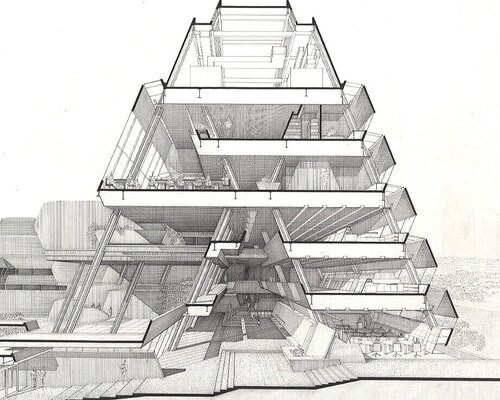
FROM AN ICON OF AMERICAN DESIGN —
FROM AN ICON OF AMERICAN DESIGN

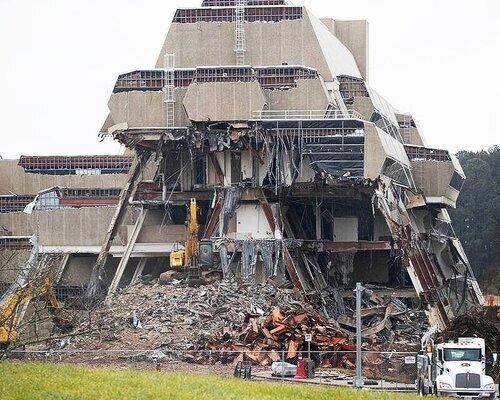
— TO DEMOLITION DEBRIS.

TO DEMOLITION DEBRIS.

And if you see something going on at a Rudolph site—that a building may be threatened, or is not maintained, or is about to be marred by an insensitive ‘update’ - please let us know (we’re easy to contact.)


IMAGE CREDITS:

Top photograph of the Burroughs Wellcome Building: image courtesy of the Joseph W. Molitor architectural photographs collection, located in Columbia University, Avery Architectural & Fine Arts Library, Department of Drawings & Archives; Photographs of the Burroughs Wellcome building, in the process of demolition: photography by news photojournalist Robert Willett, as they appeared in a January 12, 2021 on-line article in the Raleigh, NC based newspaper The News & Observer; Perspective-section drawing, by Paul Rudolph, through the main body of the Burroughs Wellcome building: © The Estate of Paul Rudolph, The Paul Rudolph Heritage Foundation
Adding To Our Knowledge of Paul Rudolph: his 1994 interview with Zak Ghanim

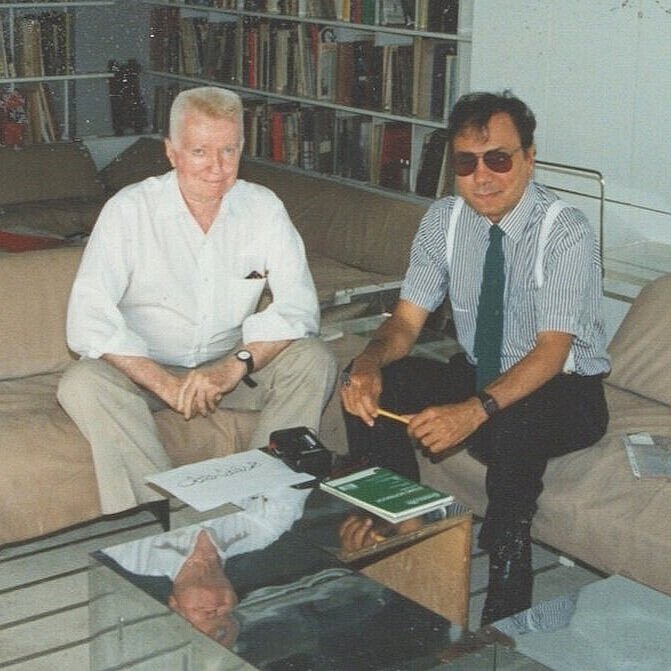
Paul Rudolph (left) with Zak Ghanim (right) during the 1994 interview at Rudolph’s Beekman Place home-office in NYC.

Paul Rudolph (left) with Zak Ghanim (right) during the 1994 interview at Rudolph’s Beekman Place home-office in NYC.

THE HISTORICAL MISSION

The mission of the Paul Rudolph Heritage Foundation is to spread knowledge about the profound legacy of Paul Rudolph, and to preserve the work of this great and internationally-important 20th century architect - and we do accomplish this in many ways, including:

  • Education

  • Advocating for preservation

  • Actively engaging with the scholars, students, and journalists

  • Publications

  • Encouraging the proper care and stewardship of Rudolph-designed buildings

And— some of our most rewarding activities involve historical research. Rudolph, across a half-century career (and hundreds of projects), created an enormous body of work. Moreover he was involved in a variety of other activities (education, writing, travel, research, entrepreneurship…). While Rudolph left a large body of documents, and several important books have been written about him, we still find that that numerous questions emerge—and the mysteries are compounded by gaps in the records. So we become detectives (which is part of a historian’s role): seeking out clues that lead to further insights and facts about Paul Rudolph. When we find another a new facet of Rudolph’s work and thought (another “piece of the puzzle”), we’re thrilled.

That is why we were happy to discover an interview with him, one which we were not aware of until recently. It was conducted in 1994 (a few years before Rudolph’s passing in 1997), at Paul Rudolph’s “Quadruplex” residence-office on Beekman Place in New York City.

At the time of the interview, Paul Rudolph was still very active, with several projects underway (especially in Asia)—but, at age 78, he also had a long-view perspective on his life and career, and ZAK GHANIM, the interviewer, was able to elicit some fascinating comments from Rudolph. The fact that Mr. Ghanim is an architect, with an active practice of his own, no doubt enhanced his ability to question Rudolph with the insight of a fellow professional.

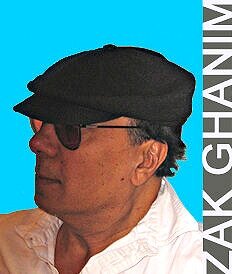
Architect Zak Ghanim—who conducted this insightful interview with Rudolph.

Architect Zak Ghanim—who conducted this insightful interview with Rudolph.

THE INTERVIEWER: ARCHITECT ZAK GHANIM

Zak Ghanim is an award-winning architect, urban planner, interior designer, illustrator, writer, lecturer, editor and journalist. He was born in Egypt and received his degree in Architecture from Alexandria University. His office is based in Toronto, and he has produced over 1,000 international projects---including in the domains of commercial, hospitality, religious, retail, and residential design, as well as community centers and factories.

He has received awards from a variety of distinguished organizations—and his projects have appeared on the covers of numerous publications, and featured in international newspapers, periodicals and books—as well as having been in exhibitions and featured on television shows and primetime news.

Mr. Ghanim is in the process of publishing two books: New Visions on Architecture (which will include this interview with Paul Rudolph), and Travel Photography: a collection of architectural and artistic images photographed by him in over 5 continents. The full text of his books—as well as his comprehensive design portfolio—can be found on Mr. Ghanim’s website, which you can see here.

We are grateful to Zak Ghanim for giving us permission to share his interview with Rudolph, and to include it as part of our documentary archive.

GHANIM ON ARCHITECTURE aND INTERVIEWS

In the introduction to his book of interviews of architects, New Visions on Architecture, Mr. Ghanim offers some insights on his interest in architecture and intentions for the interviews—and here are several excerpts:

“Since my early undergraduate years, I have been fascinated with the work of the masters of architecture. I have tried to comprehend how they evolved their ideas and opinions, where they drew all that creativity from, and how can an ambitious young designer be a part of that process.”

“Frank Lloyd Wright, Le Corbusier and Mies van der Rohe had all made their marks in the early 20th Century, but now their disciples must come forth and develop their own styles. It is time for the new generation to stand on a higher plateau. Our needs have altered and our understanding of nature's role in architecture has been redefined. As lifestyles, change so do values, both artistically and socially.”

“As we come to the dawn of a new century, I wanted to present the words of these leaders to everyone who is interested in art and architecture, so that they can understand where the future of architecture is taking us. It has become more evident that the ordinary person on the street is concerned and intrigued with the role of architects. I feel by committing their words to paper, many can gain an insight into their creativity and understand the discipline and aspiration that it takes to become a pioneer in a specific domain.”

EXCERPTS FROM THE INTERVIEW

The interview covers many aspects of Paul Rudolph’s life and career, and below are several examples of Zak Ghanim’s questions and Rudolph’s responses:

ZAK GHANIM:  YOUR FATHER WAS A METHODIST MINISTER, DID THIS HAVE AN EFFECT ON YOUR ARCHITECTURE AS BEING CONSERVATIVE, PRAGMATIC OR DISCIPLINED?

PAUL RUDOLPH:  Most definitely. When I was six years old, my father built a church and of course an Architect was involved. When I saw his drawings and models, I knew instantly it was for me, and I have never changed my mind.

Z.G.  SO, YOU ALWAYS WANTED TO BE AN ARCHITECT?

P.R.  I had no choice, I was very lucky. If someone asked me should he/she be an architect, I would say, you cannot teach people to be talented, you cannot teach people to design by showing what others have done, you can only clarify principles, but you cannot really teach youth to be designers. I have always been able to draw easily, since I was a child, and still do.

* * *

Z.G.  WHAT KIND OF EXPERIENCE DID YOU GAIN FROM THE BROOKLYN NAVY?

P.R.  Apparently, you did some homework. They thought they could make a Naval Architect out of me, in four months, by sending me to M.I.T. for a ridiculous course. I found myself in charge of 300 people making repairs to destroyers in the Brooklyn Naval Yard. That was some fantastic experience. I saw how a very large organization went about dividing its work. Trying to utilize talents of a person was of the utmost importance, I could understand drawings while other people could not, and I began to understand the relationship between the administration and the people who were building, so I really had a fantastic job.

* * *

Z.G.  BACK IN 1954, YOU WERE AWARDED THE TITLE OF "OUTSTANDING YOUNG ARCHITECT" AT THE INTERNATIONAL COMPETITION HELD IN SAO PAULO IN BRAZIL, THAT MUST HAD A THRILL FOR YOU AT YOUR EARLY STAGE OF YOUR PROFESSION.

P.R.  Not only was it a thrill, it helped me financially.

Z.G.  WHAT WAS THE BASIS OF YOUR SELECTION?

P.R.  I entered that completion with the design of the Walker guest house that was built in Sanibel Island, Florida back in 1953. It was a 24 by 24 foot wooden house. It had three 8 by 8 foot bays. One of glass, the other two clad with solid panels. There was an arcade around the outside of the house to support the panels. These panels changed the interior space from a cozy room, in terms of closure and light, to a wide-open pavilion.

* * *

Z.G.  IN YOUR EARLY CAREER, YOU SPENT SOME TIME IN EUROPE, THROUGH A SCHOLARSHIP. WHAT KIND OF IMPACT DID THIS HAVE ON YOU?

P.R.  The United States was built in the nineteenth century, and has never been strong in terms of Urbanism. The U.S. is essentially based on eclecticism, where Europe is the exact opposite. The strength of Urbanism in Europe to this day is fantastic. You could not believe the effect which European Cities had on me. I began to understand that architecture is about Urbanism, that the small must be related to the large and vice versa, that you cannot ignore the environment. I began to understand the importance of the relationship between the vehicular architecture and the so-called high style architecture, the importance of building types, the relationship of transportation of all kinds to the city. I understood that the chariot entrance to the Acropolis was formed absolutely beautifully in relationship to the pedestrian entrance. Until today, we have not learned how to relate our automobile, which is our chariot, to the vehicular system in this country. We build the ugliest cities in the world and this is so painful, because I do not think it has to be that way.

* * *

Z.G.  BUT YOU STUDIED UNDER GROPIUS WHO BELIEVED IN COLLABORATION IN DESIGN.

P.R.  I do not work with other designers, but I do believe in that concept, because for many people it may be the only way they can work. Gropius himself would be the first one to say there are many ways for teamwork; it's a question of what you mean by teamwork. If there is a team of architectural designers, goodbye, but if the architect teams up with a structural engineer, a mechanical engineer, an acoustical engineer, an electrical engineer, a geographer, an economist and so on, but not five architectural designers. You see, Gropius believed that through discussions, one could reach a clarification and a higher level of understanding, but then I say if that is true, I believe it depends on who you are discussing things with. It is a very complicated issue. I make no bones about what I do, I know what I do well and what I don't do well. I just want to be used in a good way, that's all.

* * *

Z.G.  I UNDERSTAND THAT YOU WERE NOT HAPPY WITH THE FINAL LOOK OF THE MARY COOPER JEWETT ARTS CENTRE FOR WELLESLEY COLLEGE, WELLESLEY, MASSACHUSETTS BACK IN 1955. WHY IS THAT?

P.R.  In the U.S. architects tend to think that the nineteenth century has spilled over into the twentieth century, and that one should build only twentieth century architecture. I am very proud that this building was part of the very beautiful campus, and one had to say it was built in this century. That was the basic notion. In other words, I am talking about urbanism, which I did not really learn in school. I am a great believer that education is based on many things. In any event the idea of adding a 20th century building to a Gothic campus created a form of space, kind of Acropolis, looking down south to the lake. If I were to have the same commission today, I would do it the same way, in principle. The thing I feel inferior about the building, has to do with the interior space, which was not developed exactly the way I wanted. Regardless, in my opinion, Wellesley College was one of the first buildings that tried to marry the new and the old United States.

* * *

Z.G.  WHAT DID YOU CONTRIBUTE AS A CHAIRMAN OF YALE SCHOOL OF ARCHITECTURE?

P.R.  I do not know if I made any contribution. I patterned my eight years there very much after Gropius, not stylistically but in principle. What Gropius basically said, was that architecture, in the real sense of the word, is a means by which people express their aspiration. In that sense, we really are servants to society. I genuinely believe that things are constantly changing, and that is based on the series of principals that we started speaking of. I tried to teach that architectural space is what determines, any project whether religious, governmental or housing, and that scale is of the utmost importance, especially in terms of Urbanism.

* * *

Z.G.  I WOULD LIKE TO HEAR YOUR OPINION ABOUT THE LATEST TRENDS IN ARCHITECTURE; POST- MODERNISM, DECONSTRUCTION....

P.R.  The only thing I like about Post-Modernism is its light interest in urbanism, but it is far too nostalgic and stylish. If you had a bunch of Cape Cod cottages, according to Post-Modernism, the only thing to do is to build more cape cod cottage. I don't believe in this, I am totally against Post- Modernism, as conceptually seen, other than what little it has to say about urbanism. Modernism does not have all the answers, I do not think it does, but it tends to address this century's problems, and has within its concepts a great many possible solutions.

* * *

Z.G.  HOW DO YOU LIKE THE AT&T BUILDING?

P.R.  No comment.

* * *

Z.G.  FOR THE PAST EIGHTEEN YEARS YOU HAVE BEEN DEALING WITH DIFFERENT INTERNATIONAL PROJECTS. WHAT KIND OF EXPERIENCE DID YOU OBTAIN FROM SUCH INVOLVEMENT?

P.R.  I have been working mostly in South East Asia, and I have found that very rewarding on many levels. The attitudes are very different from the United States. It is also the idea that the labor is still relatively very inexpensive, and what I want to do is very labor intensive. The Pacific Rim is in its most important stage economically, but artistically it is not very clearly defined yet. I think it will be soon.

* * *

Z.G.  HOW DO YOU VISUALISE THE FUTURE OF CONTEMPORARY ARCHITECTURE? ARE WE GOING IN THE RIGHT DIRECTION?

P.R.  First of all, do you see that each new trend cancels out the other, and leaves you with nothing. I really, honestly believe in movements that add to urbanism or add some dimensions to human life. Then I am for it, but if I do not see that, then I am against it. I feel sad about things right now, but I also feel very hopeful. Many false paths have been perceived, and I believe the problems that one sees everywhere will not go away. Architects right now, as I see, tend to solve or address themselves to problems which are fine in terms of magazines, but have nothing to do with human needs or aspirations.

* * *

Z.G.  YOU PRODUCED SOME OF THE MOST METICULOUS AND ORDERLY DETAILED BLACK AND WHITE COLLECTION OF PERSPECTIVES. HOW MUCH WERE YOU PERSONALLY INVOLVED IN THE PRODUCING OF THOSE RENDERINGS?

P.R.  When I was very young, I personally drew every line. In many ways those are the only drawings which I like. Then I became very busy, and what I would do perspective and almost everything in pencil, then I had staff to fill in certain passages. But when it came a matter of gradation, I would always do that, and when it was a matter of hatching, someone else could do that. So I always had some assistance.

* * *

Z.G.  WHAT IS ON THE DRAFTING BOARD NOW?

P.R.  I am still working in South East Asia and Hong Kong. I don't know why, but I have a bunch of projects I'm working on, a total of six private homes and a small office building in Indonesia. An office building in Singapore, also I'm working on a town in Indonesia.

Z.G.  HOW ABOUT THE US?

P.R.  One house!

THE COMPLETE INTERVIEW

The complete text of Zak Ghanim’s interview with Paul Rudolph can be found at the Paul Rudolph Heritage Foundation’s ARTICLES & WRITINGS page (which has a large collection of written resources on and by Rudolph)—and a direct link to the full interview is here.


IMAGE CREDITS

NOTES:

The Paul Rudolph Heritage Foundation gratefully thanks all the individuals and organizations whose images are used in this non-profit scholarly and educational project.
The credits are shown when known to us, and are to the best of our knowledge, but the origin and connected rights of many images (especially vintage photos and other vintage materials) are often difficult determine. In all cases the materials are used in-good faith, and in fair use, in our non-profit, scholarly, and educational efforts. If any use, credits, or rights need to be amended or changed, please let us know.

When/If Wikimedia Commons links are provided, they are linked to the information page for that particular image. Information about the rights for the use of each of those images, as well as technical information on the images, can be found on those individual pages.

CREDITS:

Photos of Zak Ghanim interviewing Paul Rudolph: courtesy of Mr. Zak Ghanim; Photo of Zak Ghanim: courtesy of Mr. Zak Ghanim.

Rudolph's BOSTON GOVERNMENT SERVICE CENTER: it's fate moves to a new phase

PAUL RUDOLPH’S BOSTON GOVERNMENT SERVICE CENTER: PAST, PRESENT—AND A POSSIBLE FUTURE

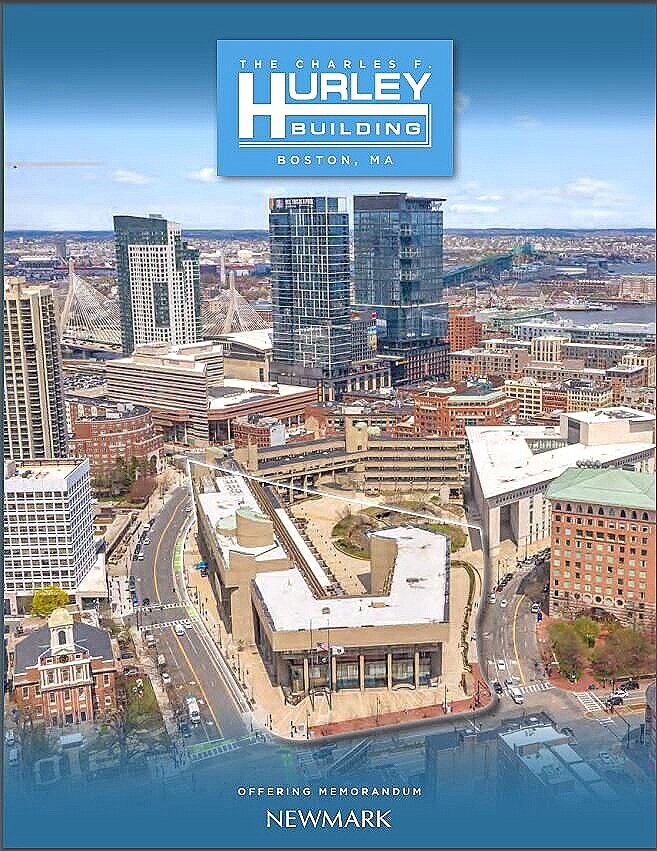
The cover of the recently issued OFFEREING MEMORANDUM: an extensive booklet which gives an overview of the Boston Government Service Center’s HURLEY BUILDING site as a development opportunity.

The cover of the recently issued OFFEREING MEMORANDUM: an extensive booklet which gives an overview of the Boston Government Service Center’s HURLEY BUILDING site as a development opportunity.

The BGSC — the BOSTON GOVERNMENT SERVICE CENTER — is Paul Rudolph’s large, civic building in Boston—and one of the largest projects in his long and prolific career. The building—really, several buildings in one—is a composition of plazas, interiors, offices, public spaces, forms, textures, and seating, was designed to serve many functions. It contains facilities for education, health (including mental health), welfare, unemployment, parking, and other state government offices.

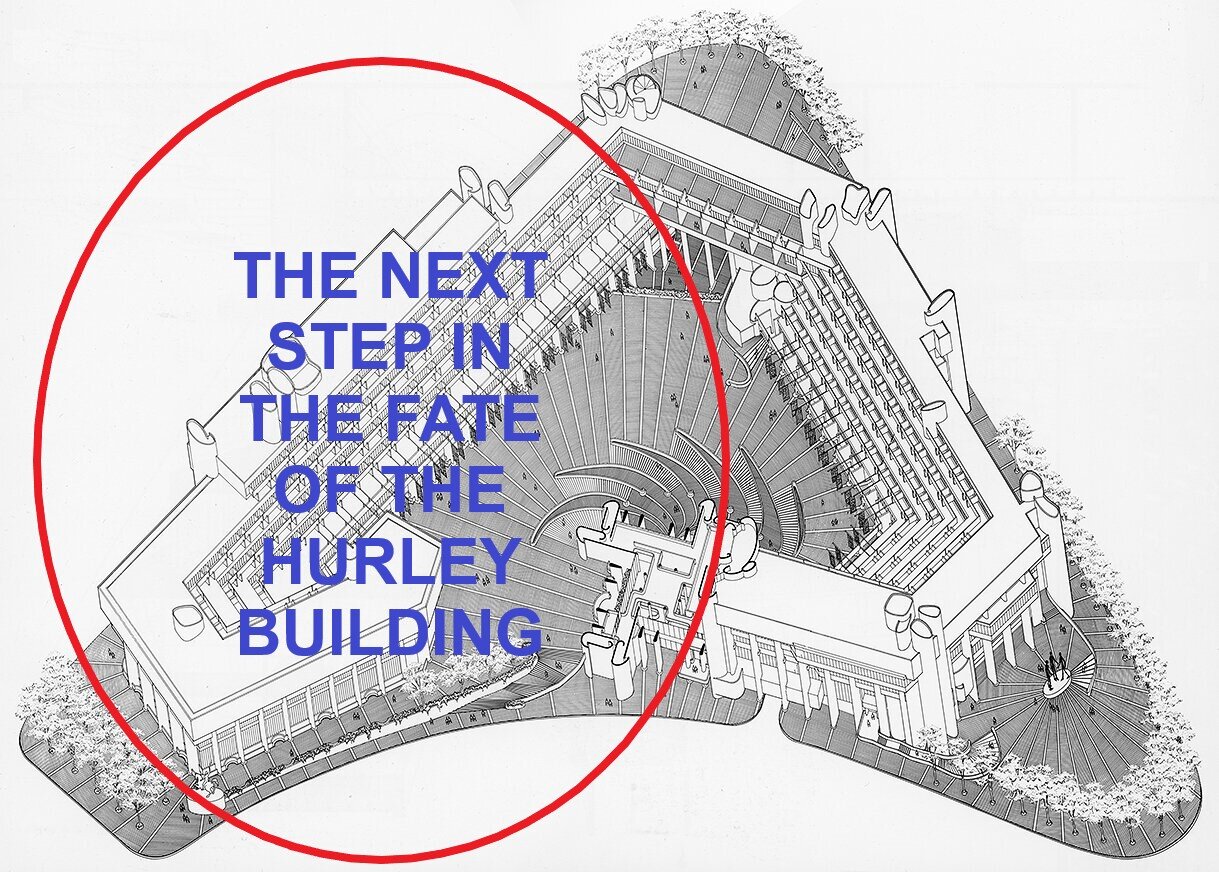
The HURLEY BUILDING is a large part of this complex. Paul Rudolph’s aerial view of the complex, as he originally envisioned it, is at the top of this article—and the oval encloses the Hurley Building section. At right is an aerial photo of the complex—and Hurley is the building at the lower center with the white roof.

The HURLEY BUILDING is under threat—and the following is an update on the developing situation.

THE PLAN UNFOLDS…

In 2019, Boston Globe reporter John Chesto reported:

“The [Massachusetts state government] administration. . . .unveiled plans to redevelop the state-owned Charles F. Hurley Building, at the edge of the old West End and Government Center, to open up a prime 3.25-acre site on the corner of Staniford and Cambridge streets. The deal could, at a minimum, fetch the state tens of millions of dollars.

“The state would issue a ground lease to a development partner that would oversee the design, planning, and construction of a new office complex, with the likelihood of new ground-floor retail and restaurant spaces as well. The administration said it expects to identify a redeveloper within the next 18 to 24 months after putting the project out to bid.’

STUDIES, MEETINGS, TESTIMONY—AND MAYBE MOVEMENT:

The threat to the building—a strong implication of the above announcement—got the full attention of the Paul Rudolph Heritage Foundation, as well as Boston/Massachusetts-area preservation organizations and a series of “stakeholder” meetings were held to learn about the project and get input. Studies were commissioned by the state (and made available for review), and further input/pushback was given. The opinions of state agencies were also part of the discourse.

At the end of this, we did learn of one positive development, from a report the state issued last February. It said that the state:

”. . . .intends to express a preference. . . .for redevelopment schemes that pursue adaptive reuse of the existing building – that is, schemes that retain some or all of the existing building. . . .”

It seemed that activism had moved the state to a more positive, adaptive reuse preference—one which we and others had been advocating. But we also pointed-out the elastic nature of the language used in the state’s report, with no clear and strong commitment to actually acting on the recommendations of those focused on the preservation of our cultural-historical heritage.

The OFFERING MEMORANDUM’s Executive Summary uses  impressive photographs of the Hurley Building.

The OFFERING MEMORANDUM’s Executive Summary uses impressive photographs of the Hurley Building.

THE LATEST DEVELOPMENT

The state is moving ahead with the project. They’ve now issued an “OFFERING MEMORANDUM—-a 60 page booklet on the development potential of the site. It’s an invitation to developers to engage in this “EXCEPTIONAL PARTNERSHIP OPPORTUNITY” and “PREMIERE DEVELOPENT OPPORTUNITY”.

The booklet offers statistics and facts about the neighborhood & region (highlighting the nearby concentration of medically-oriented companies and institutions, showing local transportation facilities, sharing economic and demographic factors, identifying major employers in the area, showing plans and data for the existing building and site, and defining parameters & goals of the project—-and it uses some of the best photographs of the building we’ve seen in a long time.

The OFFERING MEMORANDUM is a model of how to make a project attractive, and it is worth studying for the way it piles-up evidence that this is a prime opportunity for a developer.

For Example: Below are two spreads from the booklet highlighting the site:

medical center.JPG
mixed use environment.JPG
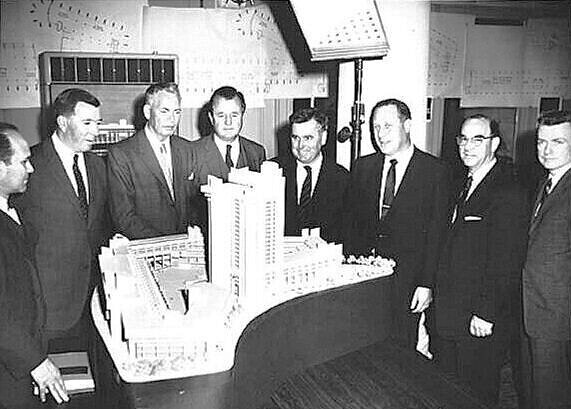
Key players at the creation of the Boston Government Service Center. In the foreground is a model of the complex, with the Hurley Building closest to the front of the picture (the model also includes the unbuilt office tower.) In the background are architectural drawings of the complex: an elevation and numerous floor plans. Among the people assembled for the photo are Edward Logue and Paul Rudolph (who is standing at far right.)

Key players at the creation of the Boston Government Service Center. In the foreground is a model of the complex, with the Hurley Building closest to the front of the picture (the model also includes the unbuilt office tower.) In the background are architectural drawings of the complex: an elevation and numerous floor plans. Among the people assembled for the photo are Edward Logue and Paul Rudolph (who is standing at far right.)

WHAT’S IN THERE—

The state’s goals are explicit:

'“[The state] is seeking to establish a long-term ground lease with a development partner. . . .for the redevelopment of the Hurley Building. It has identified three primary goals for the project:

• Cost-effectively address capital renewal needs of an outdated state asset

• Consolidate state office space into assets under long-term control

• Transform an imposing “super-block” into a pedestrian-friendly, 24/7 neighborhood asset

[The state} anticipates anchoring the project via a long-term lease or leasehold condominium interest for up to 350,000 gross square feet of space in the redeveloped property.”

There is also a section outlining what interested developers will be required to submit: requirements for qualifying to participate, and the features that each proposal must address.

The OFFEERING MEMORANDUM devotes a page to “Stakeholder Engagement”—which outlines both neighborhood considerations as well as preservation & design factors—and there’s another page on “Design Guidelines” (with sub-sections on Urban, Building, and Sustainable design).

And, elsewhere in the booklet, there’s information about the building's history, which identifies several of its key architectural characteristics. There’s language about “HISTORIC PRESERVATION CONSIDERATIONS” including:

“The Massachusetts Historical Commission and other preservation advocates have been and will continue to be integral in the redevelopment of the Hurley Building. . . .

The BGSC is eligible for listing on the state and federal registers of historic places.

[The state] engaged Stantec Architecture to establish design guidelines for the Hurley Building redevelopment. These guidelines, which have been reviewed by the project’s various stakeholders, include design principles categorized into three sections:

• Urban Design — Encourage significant, creative, dynamic urban interventions that complement, celebrate and improve the Hurley Building, its site and the entire urban block

• Building Design — Seek a solution that leads the nation in addressing a common challenge of adapting and adding to assets in ways that respect the Hurley and Lindemann [the other art of the BGSC] Buildings’ unique architecture

• Sustainable Design — Anticipate that the project will be a showcase of sustainable redevelopment strategies for similar buildings of its era in the Commonwealth and the nation.”

The Design Guidelines page from the OFFERING MEMORANDUM for the Hurley Building.

The Design Guidelines page from the OFFERING MEMORANDUM for the Hurley Building.

The “DESIGN GUIDELINES” state:

BUILDING DESIGN

Goal

Seek a solution that leads the nation in addressing a common challenge of adapting and adding to assets in ways that respect the Hurley and Lindemann Buildings’ unique architecture.

Design Principles

• Prioritize adaptive reuse/rehabilitation

• Develop an innovative and complementary new composition of massing at various scales

• Create a signature new renovation and addition(s) to complement the existing Hurley/Lindemann/Courthouse block”

Moreover, elsewhere in the document, there’s a further statement that potential developers’ proposals will be expected to show “Integration of design excellence and historic preservation considerations”.

The Boston Preservation Alliance is a major organization  that “protects and improves the quality of Boston’s architectural heritage. Through advocacy and education, we bring people and organizations together to influence the future of Boston’s historic buildings, landscapes, and communities.”

The Boston Preservation Alliance is a major organization that “protects and improves the quality of Boston’s architectural heritage. Through advocacy and education, we bring people and organizations together to influence the future of Boston’s historic buildings, landscapes, and communities.”

A POSITIVE ASSURANCE

The Boston Preservation Alliance is an important player in seeking to preserve the BGSC building, and said of the complex:

“The Government Services Center is historically significant for its team of architects, especially Paul Rudolph, its design, materiality, and architectural statement. Still today, the concrete complex stands in sharp contrast to common curtain-wall construction and the standard glass and metal we see throughout the city. The Alliance feels that the original buildings play a critical role in the landscape of Boston, telling an important story about the evolution of American design. The buildings could embrace a new life if properly upgraded. . . [They] urge the redevelopment program for the Hurley Building to preserve as much of the building as possible. Creative, sensitive modifications to keep the site functional relevant to contemporary needs are attainable without wholesale demolition, and there is a great desire in the community to preserve the integrity of this complex. . . .”

And, according to their July 22nd entry of their activity log for the Hurley Building, they have also been assured by the state:

“. . . .[That] Alliance staff that we will continue to be a part of the process, and have expressed clearly and with appreciation that our efforts to date altered their perspective from an offering which directed interested parties to focus on complete demolition to one that acknowledges the historic and architectural significance and opportunities for a creative redevelopment and adaptation of the existing buildings. We have been told that proposals that propose full demolition will not be considered competitive or viable.”

This is good to hear—and we hope that what the state has assured will be fulfilled.

WHAT’S NOT IN THERE (THE LACK OF SPECIFICS)—

But, reading the OFFERING MEMORANDUM, we are still concerned—

What is NOT clearly stated, by the state, is vital/specific information about how the project will proceed - factors which have consequences for how much weight will be given to preservation and adaptive reuse:

  • How is the success and thoroughness of the developer’s proposals to be judged?

  • What is the process by which the review/judgement will be performed?

  • Who will do the judging?

  • What opportunities will there be—and at what junctures—for stakeholder input (including from preservation agencies and advocacy groups)?

  • Will there be opportunities for reviewing (and commenting on) proposals submitted during the process, including proposals initially submitted by developers —and— the proposals of the finalists —and— the proposal of the winner?

Paul Rudolph Heritage Foundation is carefully watching this process—and will seek to participate in positive ways for attaining the maximum respect for this landmark work of architecture.


P.S. — THE LOGIC OF RUDOLPH’S PLANS

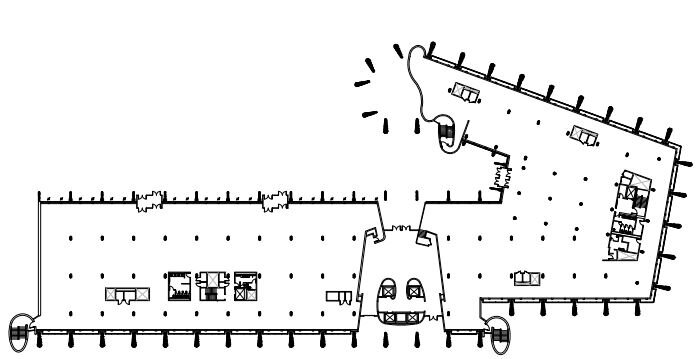
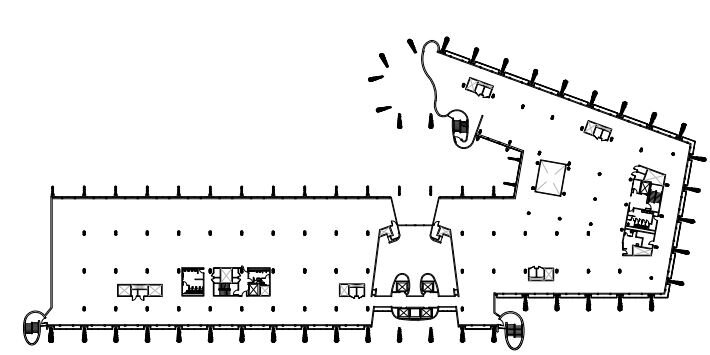
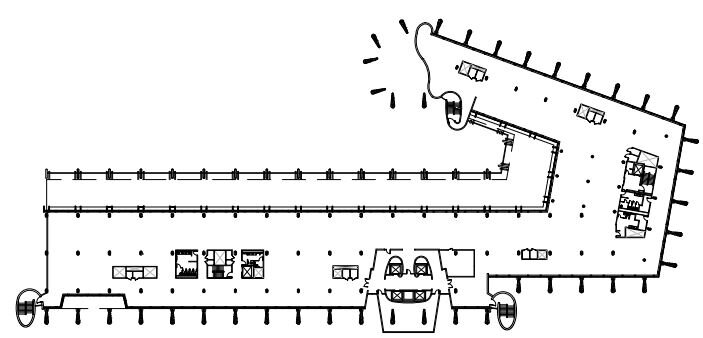
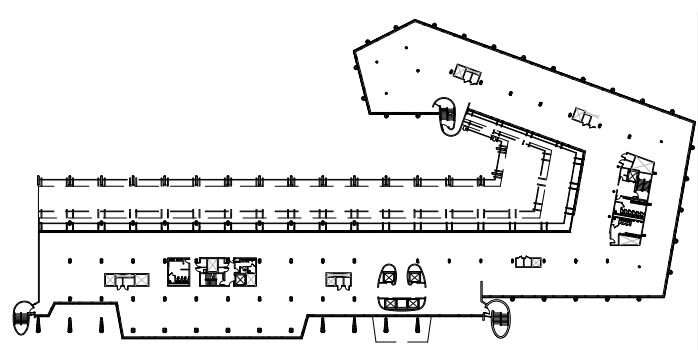
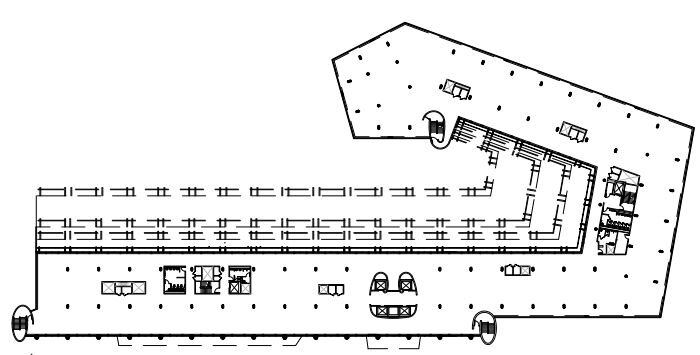
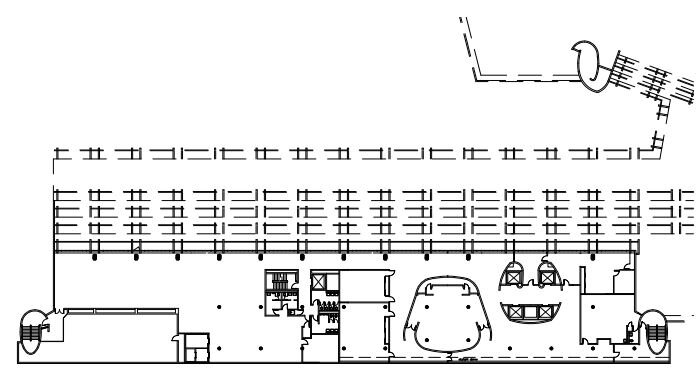
The OFFERING MEMORANDUM includes something not often seen in publications about the Boston Government Service Center: a full set of the floor plans of the affected structure (the HURLEY BULDING). We reproduce, from the report, those plans—-which include all levels from the Basement -to- the Sixth Floor.

Worth noting about these plans are:

  1. The columns are laid-out in a logical grid, and spaced-out with sufficient distance to allow for flexible arrangements.

  2. Exit stairs are well placed at the ends of the building, and at the mid-point.

  3. Among the most expressive features of the exterior are the curved towers. They are used to enclose exit stairs, so their unusual shape does not impinge on the more conventionally-formed office spaces.

  4. The elevator cluster is placed centrally, making users close to it from both sides of the building.

  5. Bathrooms and other facilities are distributed within the grid, providing service to both sides of the building.

  6. There’s a balance of straightforward rectilinear spaces —and— of “shaped” spaces (at the entry halls, the elevator cluster, a top-floor meeting room, and the end of one wing); the latter type giving the interior experience of the building a memorable character.

  7. As the building rises, it steps-back on the courtyard side (which would be at the top-left of each plan)—gradually reducing its mass, and opening more of the courtyard to the sky and sun.

The Paul Rudolph Heritage Foundation believes the HURLEY is perfect for ADAPTIVE REUSE. The logical layout of the Hurley Building’s floor plans show that it is a prime candidate for such a planning approach.
ABOVE:  Hurley Building BASEMENT FLOOR PLAN

ABOVE: Hurley Building BASEMENT FLOOR PLAN

ABOVE:  Hurley Building FIRST FLOOR PLAN

ABOVE: Hurley Building FIRST FLOOR PLAN

ABOVE:  Hurley Building SECOND FLOOR PLAN

ABOVE: Hurley Building SECOND FLOOR PLAN

ABOVE:  Hurley Building THIRD FLOOR PLAN

ABOVE: Hurley Building THIRD FLOOR PLAN

ABOVE:  Hurley Building FOURTH FLOOR PLAN

ABOVE: Hurley Building FOURTH FLOOR PLAN

ABOVE:  Hurley Building FIFTH FLOOR PLAN

ABOVE: Hurley Building FIFTH FLOOR PLAN

ABOVE:  Hurley Building SIXTH FLOOR PLAN

ABOVE: Hurley Building SIXTH FLOOR PLAN


IMAGE CREDITS

NOTES:

The Paul Rudolph Heritage Foundation gratefully thanks all the individuals and organizations whose images are used in this non-profit scholarly and educational project.

The credits are shown when known to us, and are to the best of our knowledge, but the origin and connected rights of many images (especially vintage photos and other vintage materials) are often difficult determine. In all cases the materials are used in-good faith, and in fair use, in our non-profit, scholarly, and educational efforts. If any use, credits, or rights need to be amended or changed, please let us know.

When/If Wikimedia Commons links are provided, they are linked to the information page for that particular image. Information about the rights for the use of each of those images, as well as technical information on the images, can be found on those individual pages.

CREDITS:

Axonometric view of the overall design of Boston Government Service Center: drawing by Paul Rudolph, © The Estate of Paul Rudolph, The Paul Rudolph Heritage Foundation; Photograph of BGSC model, surrounded by key players in the development of the project (with Rudolph included at right: vintage news photo: all other images are from the “OFFERING MEMORANDUM”, created for this project of the Commonwealth of Massachusetts, with the offering being administered by Newmark.